Sunday, August 5, 2012

How to Tell When Someone is Lying

Do you ever get that feeling that you are being told a fib, but you aren't sure how to tell if someone is lying?  You feel skeptical, but you are afraid to trust your instincts.  The uncertainty is driving you crazy.  You want to believe what others are telling you, but you don't want to be taken for a fool. 

In most cases, you should trust your instincts.  Our subconscious brains are able to pick up subtle clues that tell it how to spot a lie, even when our conscious minds try to overrule it.  What are some of the clues that will help know how to detect a liar?

The Body Language of Lying

The first clue that someone is lying is when they will not look you in the eye.  Of course, experienced liars know this, so they are prepared to stare you down, if necessary.  Because of this, you have to look a little deeper when you want to know how to spot a liar.

Liars tend to hide their hands behind their back, because they don't want to seem fidgety.  They may also pull their arms up in front of themselves, as if they are trying to shrink. This can be a telltale sign of a lie.  In other cases, a liar's hand and arm movements can seem stiff.  They may also touch their face, mouth, throat or ear.  They may set things between you and them, such as coffee mugs or stacks of books, as though they do not want you to see them clearly.

The expression on a liar's face, or their general behavior, may contradict what they are saying.  If he tells you that he loves you, but can barely smile or look you in the eye when he says it, you have to wonder if he is telling you the truth!  In addition, any sign of emotion may seem out of sync or delayed.  There can be a long pause before the recipient of a gift may think to say "I love it."  In general, you may just get the feeling they are being fake.

Watch the other person's face closely if you think they are lying.  If they are blinking rapidly, nibbling on their lips, breathing deeply, blushing, or their nostrils seem to be flaring, there is a high likelihood that they are lying.  Another sign of a lie is if a right-handed person looks to their left, or a left-handed person looks to their right.  This can be an indication of a made-up answer, although it isn't foolproof.

Another odd sign of a lie is that the liar may make statement without using a contraction.  Instead of saying "I didn't do it," he may say "I did not do it."  (Remember Bill Clinton saying, "I did not have sexual relations with that girl"?)

Liars are often quick to change the subject.  They may try to use sarcasm, humor or other diversions in an attempt to change the subject.  You may notice that politicians do this all the time!

These tips are not meant to turn you into a human lie detector.  Instead, they are only intended to help you understand the clues that your subconscious may be using when it tells you that you are hearing a lie.  If you also use your conscious mind to evaluate some of these tricks to help you detect a liar, you may feel less confused when you think someone is being dishonest with you!

You may also want to read:

Politics and Lies
Online Dating Scams
Common Lies Men Tell Women
Common Lies Women Tell Men

You are reading from the blog:  http://lies-and-liars.blogspot.com

Photo courtesy of www.morguefile.com

Tuesday, July 31, 2012

Politics and Lies

It has almost become a cliche to say that politicians lie.  Sometimes we minimize the severity of their lies by saying that they exaggerate.  In other situations, we choose to believe them when they say they were mistaken, confused, or they just didn't remember what happened.  However we explain it away, Americans have shown a willingness to repeatedly accept the fact that our politicians are going to lie to us.  One of the decisions we have to make each time we go to the polls is whether or not we believe one of the candidates more than we believe the other!

This is an election year, and I prefer to avoid mentioning some of the exaggerations, missteps and controversial comments that are being made daily by our current group of candidates at the federal, state and local levels.  There will be plenty of time to enjoy them after the election is over.  However, I thought my readers would enjoy this little trip down memory lane as we review some of the more outragious lies that have been told to the citizens of this country.  Interestingly enough, these lies were told by both Republicans and Democrats.  It appears that neither party has a lock on honesty ... especially when the subject of sexual activity is brought up!

Representative Anthony Weiner (Democrat)

After a naked picture of his private parts was Tweeted to a young woman, he insisted that his Twitter account had been hacked.  When asked if what was shown on Twitter was truly a photo of him, he answered that he wasn't sure.  (How many of us actually have pictures of our private parts available for others to Tweet at their convenience?)  When the truth came out, he was forced to admit that no one had hacked his account.  Incredibly, he had sent the Tweet himself!

Senator Larry Craig (Republican)

This venerable gentlemen was accused of "coming on" to another man in a public restroom at an airport.  He had apparently stretched his foot out under the partition between the stalls and played "footsie" with the man in the next stall.  The only problem was that the man in the next stall was really an undercover cop who was trying to catch men who were engaging in homosexual activities in this particular public restroom.  The Senator's defense was that he didn't intentionally touch the cop's foot; he said, "I have a wide stance."  I'll let other men who have "wide stances" decide whether or not this was a lie!

President Bill Clinton (Democrat)

Who can forget President Bill Clinton appearing on national television to sincerely swear, "I did not have sexual relations with that woman!"  At first it was just his word against hers, and who would believe a lowly 22 year old intern rather than a United States President?  That is, of course, until a certain infamous blue dress turned up.  Eventually, even a president can be humbled enough to admit that he really did have an "improper relationship" with Monica Lewinsky.  It must have just slipped his mind.

Governor Mark Sanford (Republican)

In 2009, from June 18 until June 24, the governor of the state of Georgia disappeared.  Not only did his wife not know where he was, Georgia State Law Enforcement had also "lost" him.  He did have the forethought to tell his staff that he would be hiking on the Appalachian Trail; however, he did not answer calls to his cell phone and he didn't even call his family on Father's Day.  Surprise! It turned out that he was not in Appalachia at all.  Instead, he had flown to Argentina to be with Maria Belen Chapur, a woman whom he called his "soul mate."  It appears that he had forgotten all about the woman he had been married to for 20 years!  As a consequence of his disappearance and affair, his wife left him, he had to resign as Chairman of the Republican Governors Association, and he had to reimburse taxpayers for some of the public money he spent on trips to see his Argentinian lover.  Did he really think that no one would miss the governor of a state if he left the country for almost a week?

There are plenty of other stories that can be told about political lies, of course, and I am sure more will be mentioned in the months ahead!

You may also be interested in reading:

Politician John Edwards
Common Lies Men Tell Women
Misinformation about Affordable Healthcare Act

You are reading from the blog:  http://lies-and-liars.blogspot.com/

Official government photo of Representative Weiner was courtesy of www.wikipedia.com/commons

Above information is from various news reports and sources, including news coverage on ABC news.  Exact dates and similar details were confirmed on Wikipedia.

Saturday, July 28, 2012

Credit Fraud and Identity Theft During your Vacation

You are all packed, the tickets are purchased, the room is reserved and you have arranged for a rental car.  You lock up your house, tell your neighbors you'll be gone, and you take off for a wonderful vacation to an exotic location.  You have been organized and prepared thoroughly for your trip.  Right?  Maybe not.  There are still some risks that you may not have planned for.  How are you going to protect your credit while you are gone?

You may be on vacation, but the people who plot to steal your identity and use your credit are definitely hard at work.  While you are making all the other arrangements for your trip, there are a few additional steps that are recommended by the AARP Bulletin.  Don't feel bad if you haven't thought of doing these things.  I haven't done most of them, either; but I am going to change my ways from now one!

Preparing for Travel Before You Leave Home

Tell your credit card companies that you will be gone.  All of the credit card companies have fraud departments.  If you alert the companies, they will be realize something is wrong if you are in Hawaii, and your card is being aggressively used in Pittsburgh!

Stop your mail and newspapers.  You do not want it to be obvious that you are gone, and you do not want people to go through your mailbox looking for credit card offers and enticing financial statements they can use to steal from you.

Don't announce your trip on Facebook until you are back home.  You can share your travel pictures with your friends, once you have returned home.  Do not do it in advance.  If there are people who need to know you will be gone, email them or contact them privately.  Do not broadcast your travels to everyone. (I will have to restrain myself, and stop posting those vacation photos until I get home.)

Travel Safety at Your Destination

Use only safe ATMs at your destination.  The best ATMs to use are those in a bank lobby.  They usually have security cameras, and are less likely to have skimmers and similar devices attached to them. (I have even used an ATM is a busy Las Vegas casino.  I am absolutely not going to do that in the future!)

Do not use hotel computers to access bank and financial data.  Someone could have installed identity theft software on a public computer, and you would have no way to know.  This is also true when you use the free Wi-Fi at your hotel.  You are on vacation.  Enjoy it! (Yep, you guessed it.  I have checked my bank accounts on hotel computers.  Definitely a no-no.)

Be suspicious of phone calls from the desk clerk.  If you are called on the phone in your room and asked to give the front desk your credit card information again, don't do it.  Instead, go down to the front desk and confirm that it really was them calling.  Then, give them the information in person.

Don't take your checkbook on vacation.  It is unlikely that you will be writing checks and, if your checkbook is stolen, it could be misused and create a huge headache for you. (Why do I carry it with me all the time?  No one even takes out of state checks anymore!)

Beware of pickpockets and muggers.  Take only a minimum amount of identification and credit cards with you.  Do not carry your Social Security card.  Men should keep wallets in an inside jacket pocket or similar safe location and women should carry purses with straps that cross their chest.  In addition, have a phony wallet that you can hand over to a mugger.  It should contain a few dollars and some old hotel room keys.  (I love the idea of a phony wallet.  How clever!)

Travel safe, and don't put either your identity or your credit at risk.

You may also want to read:

Online Dating Scams
The Scam that Promises to Fix Your Credit
Cybercrimes That Use Poisoned Computer Search Results

You are reading from the blog:  http://lies-and-liars.blogspot.com/

Photo courtesy of http://www.morguefile.com/

Thursday, July 26, 2012

Stopping Lottery Scams and Cheaters

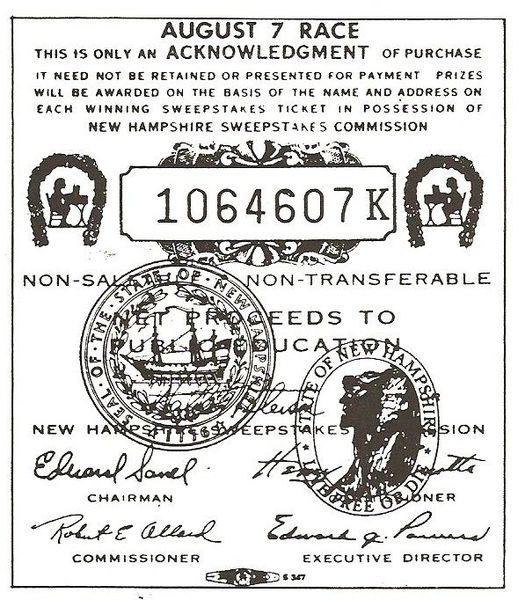
Lotteries are known to have existed since at least the Chinese Han Dynasty between 205 and 187 B.C., when they were used to finance major government projects.  European cities had lotteries as early as 1445 A.D. to raise money for their towns.  The first recorded official federal government lottery in Europe was held in 1566 to raise money for the country of England, under Queen Elizabeth.  With so many lotteries being held over the past two thousand years, there have been many lottery cheaters and a wide variety of creative lottery crimes and scams.  These crimes continue today.

Lottery Scams and Cheaters

There are various scams that people have conceived in an attempt to temporarily cheat the lottery system.  Here are a few common examples:

Advance Fee Fraud - People receive an email congratulating them on winning a lottery (that they don't remember entering.)  Then they are asked to send in money to cover the taxes or fees.  Of course, there is no prize, and the victims end up sending their money off to a stranger who keeps it.

Winning System Frauds - Sometimes dishonest people will promise to increase your odds of winning. If you pay them, they will sell you their computer software or tell you their secret.  In other cases they promise to buy tickets in other countries where the buyer supposedly has a better chance of winning; of course, they mark up the price, often doubling it, in order to get those tickets for you.  In either situation, your odds of winning are still low, and you can end up wasting a lot of money trying to find the right "system."

Stealing Lottery Tickets - Sometimes lottery cheaters are not so creative.  They simply steal lottery tickets from acquaintances or relatives who have won, and turn the tickets in for the money.  This leaves the rightful owner in the awkward position of proving that they are the ones who actually bought the ticket.

Cheating Store Clerks - In a number of cases, a lottery ticket owner takes his ticket back to the store where he bought it to see how much he won.  The store clerk may tell him the truth; however, sometimes the store clerk will tell the person he lost, or only won a small amount; then the store clerk keeps the ticket for himself, and cashes it in.  This is simply another version of stealing a lottery ticket from the rightful owner.

Just this week, Yahoo News reported on such a case in Newport News, Virginia.  A man had been buying his lottery tickets at the same gas service station convenience store for a decade, and trusted the clerk.  When she told him that he had won only $40, he believed her.  However, when his son, who knew the numbers he always played, called to congratulate him on his $600 winnings, he was stunned.  He returned to the convenience store and was told by the clerk that his ticket had been lost.  The man reported the situation to the Virginia Lottery, and the store clerk has now been indicted on felony larceny charges.

How to Protect Yourself From Lottery Cheaters

Once you know the tricks people play in order to cheat you, the solutions are obvious:

Do not send money in order to win a prize ... ever!

Do not waste money trying to improve your odds.  Accept the fact that your odds are low, and play your numbers for the enjoyment.  Just don't overdo it.  Never spend more money than you can afford on any type of gambling.  There are no sure things, and far too many people have lost all their savings because they were convinced there was no way they could lose.

Do not leave your lottery tickets lying around where they can be easily stolen by visitors to your home.  Even trusted friends or relatives may sometimes be tempted. 

Always check your numbers yourself, at home, before you take the ticket to a store to be redeemed.  Lottery results are usually announced on local television stations, as well as printed in the local newspapers.  In addition, all state lotteries post the results on their websites.  Never rely on the store clerk to tell you the truth, even if that sweet clerk seems friendly.  Most scam artists can be extremely friendly, in an attempt to win your trust.  You have to look out for yourself!

You may also want to know about these other dangerous scams:

Online Dating Scams
Computer Virus Scams
Online Used Car Scams
Phony Contest Winner Scam
The Scam that Promises to Fix Your Credit

You are reading from the blog:  Lies and Liars

Photo of old lottery tickety courtesy of http://www.morguefile.com/

Sunday, July 22, 2012

Computer Virus Scams

The other day I was sitting at home, quietly working on my computer, when I received a call from a foreign sounding man who insisted that he was calling from the Microsoft Help Desk, and they had a detected a virus on my computer.  "It is degrading your hard drive as we speak," he said.

I was skeptical.  We had our computer thoroughly gone through by an computer expert a couple of months ago, and he had upgraded our anti-virus program, and made several other changes to protect our system.

The man on the phone kept trying to get me to go to a site where he could "show" me the virus that was on my computer.  I told him I would not do it, but asked if there was a phone number where my husband could call him back.  He gave me a phone number, but told me that I should not wait.  I needed to do something right then.

I told him that I felt suspicious.  I even told him that I write a blog about scams and lies, and I was not about to rush into doing anything on my computer, simply because a stranger had called and was telling me to.  The part about the blog did not phase him.  (I guess this blog is not that scary, yet.)  He continued to push me.

Then, I asked him if my husband or our computer technician could call back and handle it.  The minute I said the words "our computer technician," he hung up on me.

When my husband came home, he called the number that had shown up on caller ID.  It took him to a company that sells anti-virus programs.  My husband is convinced that the man on the phone was trying to get me to go to a website that would either show a phony virus on my computer, or would download a virus to my computer.  Then, he would sell me an anti-virus program to "fix" my problem. I am so relieved that I did not fall for it.

My husband was so infuriated, that he reported the phone call, my conversation with the salesman, and the phone number to the Federal Internet Crime Complaint Center at http://complaint.ic3.gov/.  This government agency shares information with other law enforcement agencies, both federal and local.  Hopefully, the governement will be able to shut them down.  Of course, since the man sounded foreign, there is a good chance that he was calling from another country.  In that case, there is very little the that our law enforcement agencies can do.  We just all have to be suspicious any time we receive calls like that.

Since I initially wrote this, two people I know have also had the same phone call.  In one case, the man listened patiently to the entire explanation as it was enthusiastically given by the saleswoman on the phone.  He was told that the Microsoft Help Desk had identified a virus on his computer, and he needed to go to a certain website to see it.  When the saleswoman was finished, my friend calmly informed her that he didn't even own a computer!  Obviously, these people are just making random phone calls!

If you have had a similar experience, I would like to hear about it.  If you have ever had the Microsoft Help Desk actually place an unsolicited call to you, I would like to hear about that, too.  In addition, you may want to contact the Federal Internet Crime Complaint Center.  We need to band together to put a stop to these types of fraudulent sales techniques, whether they originate in the United States or other countries.

You are reading from the blog: http://lies-and-liars.blogspot.com/

Photo courtesy of:  http://www.morguefile/

Thursday, July 19, 2012

Baby Boomer Retirement: The Bankrate List of Worst States for Retirement


Baby Boomer Retirement: The Bankrate List of Worst States for Retirement: Often there is an article on my other blog, Baby-Boomer-Retirement, that also fits well with this blog on Lies and Liars.  We have all heard the old sayings about how statistics can lie.  This week's blog post about retirement may be one of those times.

Recently I ran across an interesting news story from Bankrate, Inc., entitled "10 Worst States to Live in During Retirement."  Their list included many states that had been listed by other retirement advisors as some of the best places to retire.  How could this be?  What could cause such as sharp difference in opinion?  In particular I was concerned about the fact that the Bankrate list included virtually every state in a broad swath across the south, from New Mexico to Georgia.  Could all these places really be terrible places to retire?

I was skeptical, as I want everyone who reads this blog on Lies and Liars to be.  We cannot take statistics at their face value, and we cannot simply say that 1/5 of the United States is a terrible place to retire.  I looked for the deeper meaning in those statistics.

Rather than simply repeat the entire Baby-Boomer-Retirement post here, I will just include a link so you can easily switch over by going to:  Baby Boomer Retirement: The Bankrate List of Worst States for Retirement.

Read the article for yourself, and see if you agree with Bankrate, or if you think they used their statistics a little too hastily.

You are reading from the blog:  http://lies-and-liars.blogspot.com/

Photo of Southern porch courtesy of http://www.morguefile.com/

Sunday, July 15, 2012

Online Dating Scams

Online dating has made it possible for single people to meet new men and women, and perhaps find that wonderful partner they have been dreaming of.  In fact, I know of several couples who met, fell in love, married and now have children as a result of online dating websites.  These sites offer great possibilities for new relationships.  However, they also make it possible for scammers to take advantage of naive or lonely people.

Online Dating Dangers

While many of these swindlers are very good at conning other people, there are a few signs that should make you skeptical about your new romance:

They quickly tell you a sob story about how their family died in an accident, or they have a sick relative.

They offer to come visit you, but they don't have enough money.  Another version of this story is that they are at the airport, bus or train station, on their way to see you, and their credit card was mysteriously declined.

They are in the military and they need money for special papers in order to visit you.  (No such required papers exist.)

They want to skip the dating website, and communicate with you directly by IM or email.  They could be trying to get access to your computer.

They send attachments in their emails.  These could contain viruses.

They have heavy foreign accents.  They could actually be a scammer working from another country.

They want a lot of personal information.  This could be a ploy to steal your identity.

Recent Research on Dating Scams

Dating scams are a bigger business than you may realize.  Approximately 100,000 Americans will $800 million to romance scams this year.  The loss of this money can be devastating to most of the victims.  Some people are known to have lost nearly all their retirement savings to these fake romances.

If you are interested in reading more of the recent research on the subject, you can find the report at:


The author also highlights the romance scam hot spots around the country, where this problem is the worst, and gives additional tips on ways to identify potential romance scams.

In the meantime, here are some ways to protect yourself.
 
Online Dating Self-Defense

There are a number of steps you can take to reduce your chances that you will be hurt by someone you meet online.  These are actions you can take privately.  Taking these actions will reassure you and help you feel more comfortable about enjoying the experience of meeting potential future partners.  These steps will not guarantee that you still won't run into a bad apple once in a while.  However, they increase your odds of having a positive outcome. 

Use paid online dating sites.  People who participate in these sites have to use a credit card, which cuts down on the number of predators.  Some sites even run criminal background checks on their members, now.

Talk to them on the phone before you ever meet them. Someone may seem smooth on the computer, but their story may be full of holes when you talk to them on the phone, and ask a lot of questions.

Be very slow to give out any personal information such as where you live or work, or your last name.

Meet them in a neutral location several times, until you feel comfortable with them.  Invite them to group events, where there will be other people around.

Avoid long-distance relationships.  The person could be much further away than you realize.  Scammers try to work from long distances, often other countries, because they are less likely to be caught.

Make use of the websites that are available to catch scammers.  Here are some of them:

Tinyeye.com (upload their picture and see where else on the internet it has appeared)

Romancescams.org (see if they have scammed others)

Pigbusters.net (another site to see if they have scammed someone else)

Google.Lo (cut and paste portions of their emails into Google, and see if the same words show up on any scam websites.)

While none of these measures can guarantee that you will be free from a romance scam, they will go a long way towards cutting the odds that you will become another victim.

You are reading from the blog:  http://lies-and-liars.blogspot.com/

Graphic of heart courtesy of: http://www.morguefile.com/